What's wrong with applying for a job yourself?
n the current job market, many candidates expect to be asked for a job. But what is actually wrong with applying for jobs yourself?


Is self-application old-fashioned?
I get it, though. It’s also nice, of course, to be asked as a candidate for another job. It strokes your ego, if you get noticed by an employer. And I also understand that employers in the current job market are proactively looking for scarce candidates themselves. But what is actually wrong with being expected as a candidate to think about your motivation for another position?
There does seem to be a certain tendency that applying for a job yourself is something to be ashamed of. It seems to be a bit old-fashioned. And somewhere I can understand that. If you are studying at university, and everyone around you is being asked for a job, you are not going to think: let me go and apply for a job myself. Then you’re also going to wait until you get a call. People don’t like to say, “I applied for a job,” they prefer to say, “I was asked. We also hear it more and more with references. Then the candidate necessarily wants to put in that he was alerted to the position. But why should you be ashamed if you are motivated to work somewhere?
Storm track walk through
I have nothing against sourcing, let that be clear. It can also certainly be a way to find the best-fit candidate for a position. But aren’t we getting a little carried away? As a candidate, it does not benefit you to be taken to the next employer on a silver platter. On the contrary, I think you gain much more in the long run if you have a very critical interviewer opposite you, who looks closely at your motivation. It is also in the candidate’s interest if he or she has to go through a ‘kind of assault course’. At each obstacle you then ask yourself: is this what I really want? This is how you discover your motivation, and we believe that this is what the success of a working relationship is all about. Research shows that 50% of the started working relationships in the Netherlands end in disappointment within the first year. A shocking number. You can prevent much of that if you focus on intrinsically motivated employees.

– Paul Bettonviel
Establishing motivation is difficult
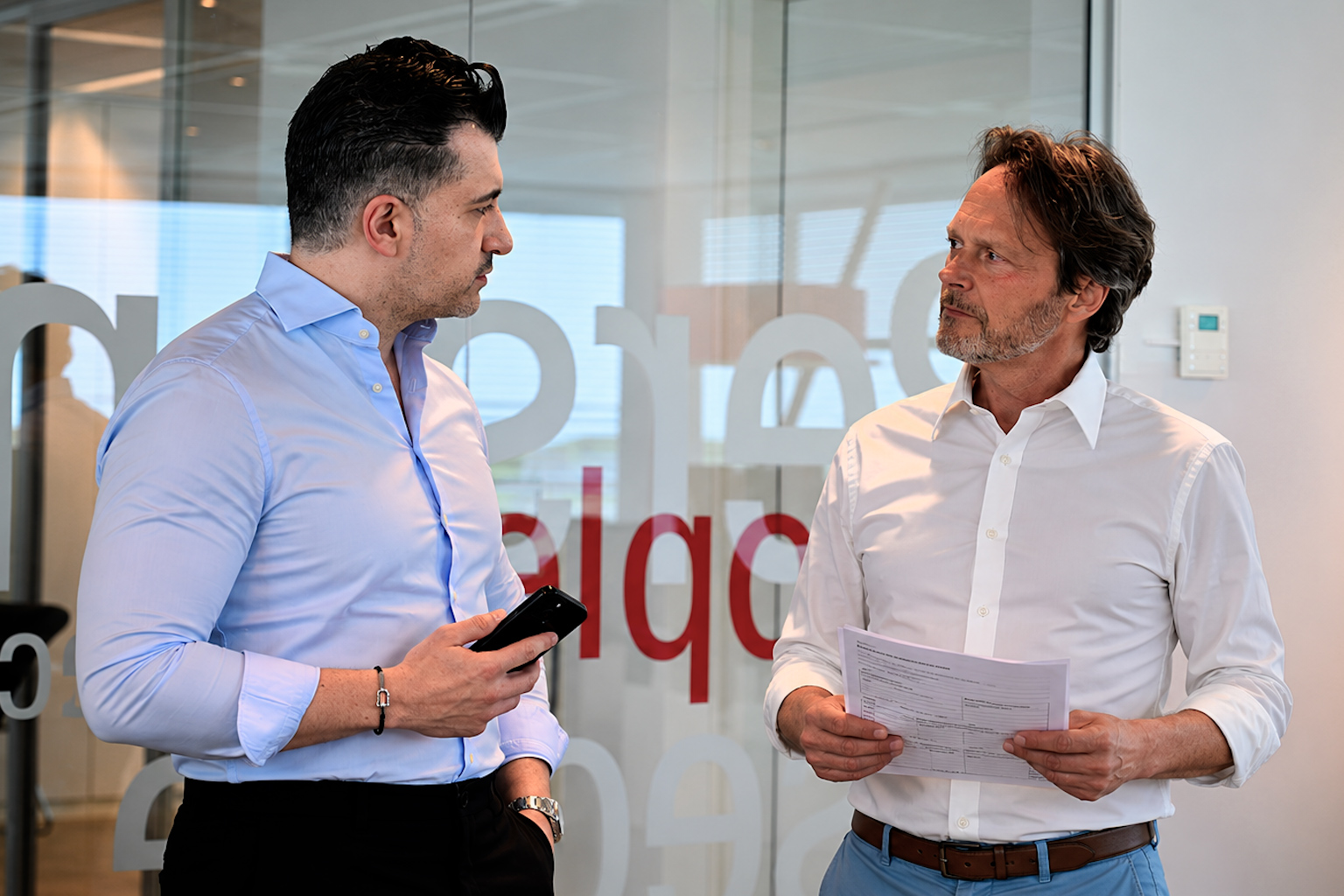
Determining the intrinsic motivation of candidates is a difficult process. You see that many clients find that difficult. I think that’s also where the added value of good agencies lies. We help them to look at certain candidates from a different, less traditional perspective. That’s why we say: invest in an interview with this candidate. And in 9 out of 10 cases we hear back later: yes, now I understand why he or she was at the table…’ Nothing against any client or organization. But they usually only do recruitment and selection a few times a year. We do it every day. It’s nice to write and talk about topics like a curriculum future, or soft skills. But in practice you see that many organizations still think very traditionally. With therefore also very traditional results. Fortunately, because that leaves something for us to solve. Something very big, even.
Always ask to apply
It is actually always preferable to ask people to apply for jobs themselves, “rather than waving a resume at a client and then pulling someone on board. When it comes to motivation, it really is best if someone decides to jump on the train themselves. After all, it is almost impossible to find out later whether the reason someone said yes is the reason you, as an employer, want. And what use is it to you to hire someone, but then after six months you both say: no, this is not it after all? The fear of rejection is an important reason why people prefer not to apply for jobs themselves, and prefer to be asked. Then they can say ‘no’ themselves, is the idea. Apparently being rejected is so scary, so annoying, that many people stick around somewhere for a long time and don’t apply, even if they no longer like it somewhere. But why really, he wonders. ‘Okay, it strokes your ego when you’re asked. But one thing you know for sure then. Then the other person is not going to ask you many critical questions. And I seriously wonder: what good does that do you?’

Not a classic cover letter
By the way, don’t think of “motivation” as the classic cover letter either. We are not concerned with that letter, we are concerned with what drives someone. What is your ambition? As an organization, it’s about: what do you want to solve for your customers? And how do you want to improve yourself in the coming period? Once you have that clear, you can ask the candidate: what would you be able and willing to do? It is not about the perfect answer, but about the question: have you thought about it at all? We don’t see that enough. Nor should you ask candidates critical questions in order to make things difficult for them. Instead, it’s about making sure that you are both sure that you want to do it together for the foreseeable future. It’s about finding the best match, long-term. That may sound strange to a recruitment agency. After all, such an agency usually has an interest in as many placements as possible, and thus the greatest possible turnover rate. But for us, the most we can achieve is that a candidate remains successful for a long time. That is what we like, that is the honor of the work. Because then apparently nothing better has come his or her way all this time, and so we have done well.
Do start talking
So ultimately the candidate also benefits from mediation through an agency. The client pays the bill, but we work just as much for the candidate. We have a huge interest in that as an agency. Ultimately, the interest is that they all become ambassadors of us. I also think that’s where we can differentiate ourselves. Clients are not looking for that one resume, they are looking for a long-term working relationship. Of course if you’re a candidate you’re going to talk if you’re asked somewhere, you should always do that. But then you have to think very carefully about whether it really fits your motivation. And I think we can be a great help in that.

Contact Paul
Fields marked with an * are required